

Showing Grace & Gratitude in Leadership
This time of year tends to bring out the theme of gratitude. Here at CAN, we’ve made gratitude the theme for the month. Moving into the Thanksgiving holiday entices everyone to think about, at least for this month, what we are grateful for. But expressing gratitude shouldn’t only be done during this time of the year, it should be considered all year long. Yes, we are all busy throughout the year, and this one day makes us all stop in our tracks and reflect. It pushes us to show our gratitude and appreciation for one another. However, should you really wait until the end of the year to let your teammates know that you appreciate them for their contributions?
Raise your hand if you have a journal or planner. Now, raise your hand if your journal/planner has a section asking you daily, weekly, or monthly to quickly jot down what you’re grateful for. Now, think about how you feel after completing that exercise. That feeling that you’re giving yourself could be given to someone you work with as well. With the same energy and frequency that you are giving to yourself.

Apparently, gratitude has many definitions. Positive Psychology defined it as more than feeling thankful. It’s a deeper appreciation for someone or something that elicits a longer positive feeling. Researchers Morgan, Gulliford, & Kristjánsson (2017) created The Multi-Component Gratitude Measure, which is comprised of four components set to measure gratitude. The four components measured are understanding of gratitude, emotions of gratitude, attitudes towards gratitude, and behaviors of gratitude.
The Four Components to Measure Gratitude
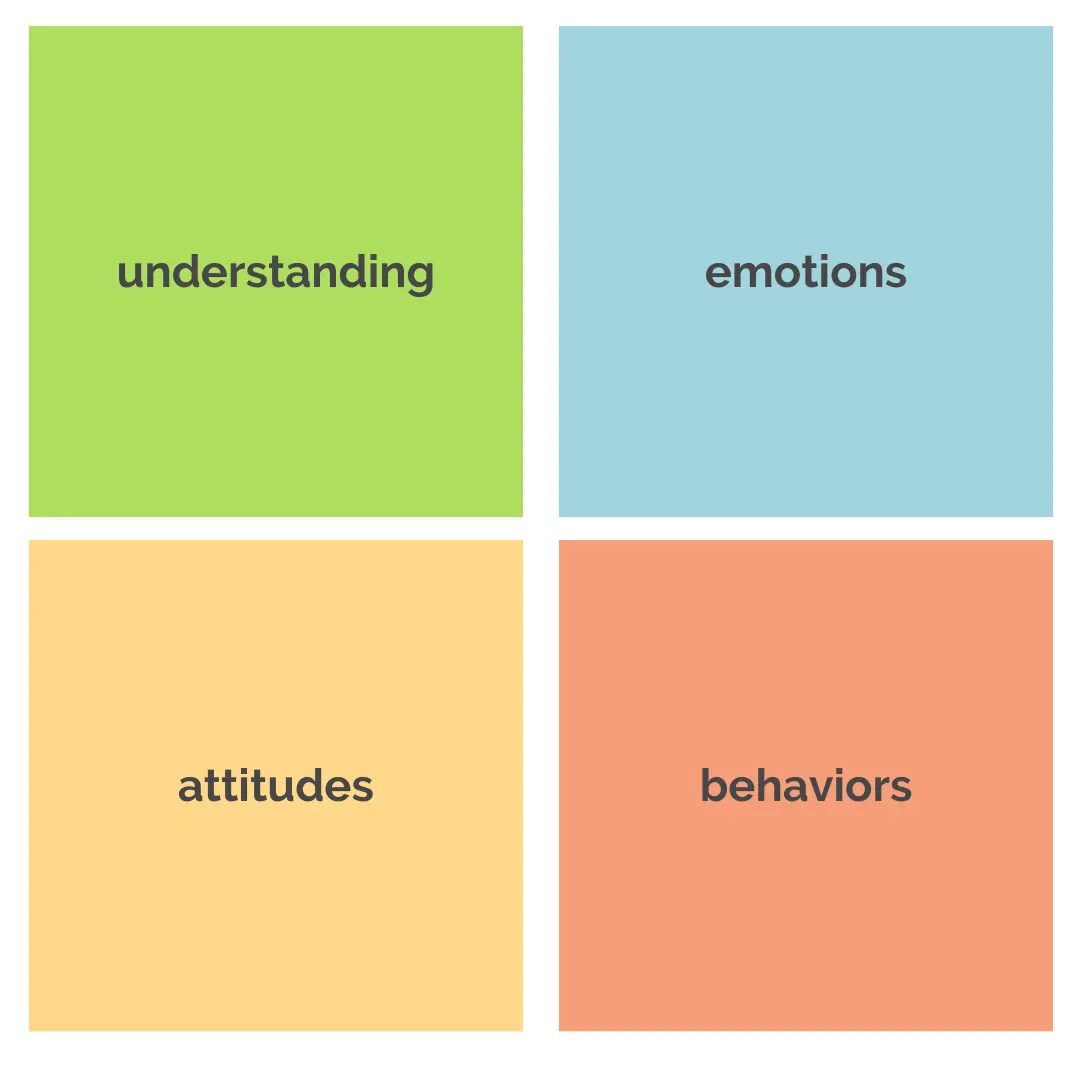
It's important that we practice expressing gratitude, not just with ourselves, but with each other on a daily/weekly/monthly basis. Researcher Robert Emmons has led various studies with data showing that being grateful can increase your personal well-being.
Some of the benefits of gratitude are:
- Enhanced wellbeing
- Deeper relationships
- Improved optimism
- Increased happiness

So, what about in the workplace? How can expressing gratitude and appreciation benefit your employees, teammates, and overall work environment? Well according to a survey conducted by the American Psychology Association, 93% of employees who indicated feeling valued at work said they are motivated to do their best work. Let’s think about how this translates in a childcare setting. If childcare workers feel valued, acknowledged, and appreciated imagine how this positive energy is put forth in their interactions with the children in the classroom, and with each other.
When leaders show their gratitude to their staff/teammates, it fosters a culture of gratitude. Allowing your working environment to develop a sense of belonging, respect, and appreciation through deeper relationships and reciprocity.
I asked several CAN community members how they show their grace as leaders and express gratitude and appreciation to their staff. Here’s what they had to say:
Listen to them. I don't know all the answers. Those working for me all have virtue and wisdom, all in different dimensions and I appreciate it all. As for my students, I make them feel they have worth and that what they already know is important. I want to build on the knowledge they have and make them stronger educators. I am not there to reinvent them with what I know. I provide opportunities for them to share their experiences and understanding so we can all learn from each other. I tell them often how much I appreciate them and am interested in learning more about their work with young children. I remind them that all of us in this profession are lifelong learners. We will never know everything about young children. This is a dynamic and ever-changing field, and we can't afford to become stagnant. I tell them about the classes I am taking myself and encourage them to continue their professional development, as well. I tell them I am there too. Help them find what they need, help them get started, and support them in whatever ways I can. Quality Early Childhood Education begins with well-trained, dedicated teachers. To me, this is the essence of Power to the Profession. Period.
I acknowledge my staff all the time on how they are doing in the classroom and thank them for the work they do. I also encourage staff to better themselves through Continuing Education and assist them where needed.
I work on a personal relationship with all of my staff. I make notes about their birthdays and send them cards. For those that I have to see on their birthday - I make them a homemade cake! I also partner with other businesses like the local radio station. When they have an appreciation day where they have free massages, facials, breakfast, etc. I give the staff some free time to attend those events. During in-service training, I will provide treats like mulled cider and donuts. I have also had a friend who is a chef donate his time to make individual omelets for each person!
When there is an issue, I take it seriously from the one who is having it, especially if it is holding them back from operating in their usual way. I look for ways to foster communication and celebrate everything we do as a team, even if we are celebrating an individual in our team.

Pay attention to their needs both professionally and personally. Follow up with them when they are experiencing issues of concern. Let them know they have your professional support at all times.
Listen with Empathy.
I tell them how I appreciate their contributions and how their contribution makes a difference. When possible, I give credit to them by recognizing their contributions… example: A special thank you to Marsha for her timely suggestions for streamlining the classroom activity. Her suggestions made a huge difference for everyone. We will continue to incorporate her suggestions in our classroom activities.
I praise individuals for the work he/she does. I acknowledge the individual for the job well done.
I ensure that I take the time to listen when staff members come to me with a problem, concern, etc. I have learned to stay silent and allow my employees time to explain without interjections or my opinions. I have learned that by giving a little (leniency) that you gain more respect. I have asked, "are you looking for advice, or do you just need to vent?" I try to lead by example. I provide opportunities for one-on-one discussions and treat my staff as an extended family without getting too personal. I recognize efforts and celebrate happy occasions while providing a safe nurturing environment at school for staff and students. At staff meetings, I recognize the efforts that teachers make to go above and beyond. Professional growth is discussed, and teacher learning days are built into our calendar. These days also help build comradery between staff members. We focus on social/emotional intelligence as well as academics, and this helps our teachers know that we are looking at the whole child and that we support them in the classroom.
Mostrando respeto. Y formando parte del equipo. Soy facilitador.
Words of encouragement, trust in their judgement, belief in their competence and capabilities, nurturing their gifts and strengths.
No matter what I always tell early childhood educators that they matter. I love telling them my story of personal and professional growth to inspire them to keep going. Keep trying and for them to see themselves as an educator, not a babysitter as the world sees them.
Grace and Gratitude is shown to people under my leadership through all levels of maturity and patience. When there are times of appreciation I celebrate the person, whether it's for helping me with a task or being my co-worker during the holidays by making sure it's a happy time for us. Although we are adults, a goody bag is the smallest token of appreciation from my end as an appreciative person. Personal growth is cared for by the smallest trip to the store to get something that I want for something I accomplished, and at times it ties with my professional growth. Professional growth coincides with personal growth, and a professional growth standard for myself was to not have a tone projected out to others that hid myself from sharing who I am with my families and students.