

The Power of Learning, Connecting, and Targeted Universalism: Reflections on NBCDI's 2023 Conference
Written by: Katorra Enoch-Longshore
As a black early education professional attending the NBCDI 2023 conference, the importance of creating a better future for Black children holds monumental importance both professionally and personally. The powerful discussions and connections made with fellow early education professionals deeply moved me. The emphasis on targeted universalism and NBCDI's comprehensive approach resonated with my belief that every Black child deserves equitable opportunities and resources to thrive.
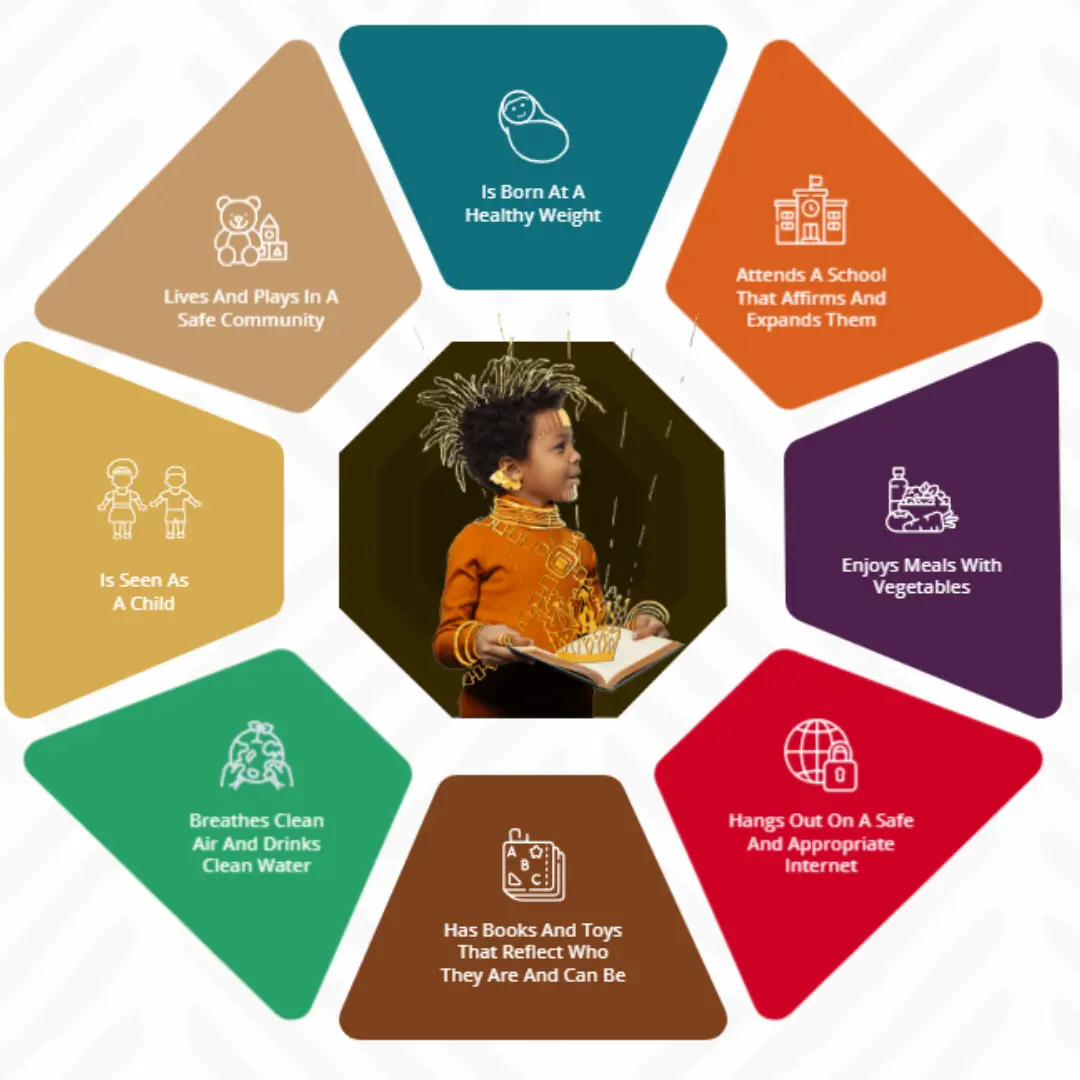
With an estimated 6.5 million Black children under the age of 11 in the United States, advocacy and action are urgently needed. NBCDI stands out as the only organization focused on the future impacts of health, education, technology, climate change, community safety, and food on Black children. The conference served as a rallying cry, reminding us of the importance of our collective efforts to create a more equitable and just society. Now is the time to amplify our voices, advocate for change, and ensure that the futures of Black children are filled with limitless opportunities.
Targeted universalism, specifically for black children, lies at the heart of NBCDI's mission. Targeted universalism is a concept that aims to address social inequalities and disparities by implementing policies and interventions that target specific marginalized or disadvantaged groups while simultaneously benefiting the entire population. It recognizes that different groups may face different barriers and challenges, and therefore requires tailored approaches to ensure equitable outcomes. The urgent need for universalism was emphasized at the conference, rejecting the notion that any child should be left behind due to their race, background, or circumstances. By prioritizing areas such as health, education, climate, food, and technology, NBCDI comprehensively addresses the holistic needs of Black children. Overall, targeted universalism promotes the idea that a more equitable society is achieved by combining universal policies that benefit everyone with targeted interventions that address the unique needs of marginalized communities. Through targeted universalism, we can create a society where every black child thrives, serving as a conduit for the success of all children.
The choice of Charlotte as the conference's location adds a profound layer of significance. The historical plight of the black child in the city serves as a stark reminder of the challenges faced by Black communities throughout history. The landmark Supreme Court case, Swann v. Charlotte-Mecklenburg Board of Education, in 1971, addressed racial segregation in public schools and directly impacted the education of black children in Charlotte.
Before the Swann case, black children in Charlotte faced separate and unequal educational opportunities due to racial segregation. The court ruling in the case was a pivotal moment in the fight for educational equity, as it held that racial quotas and busing could achieve desegregation and ensure equal educational opportunities for all students, including black children. This decision led to the implementation of busing programs, aiming to integrate schools and provide black children with access to better-quality education.
The Swann case serves as a historical reference that highlights the ongoing struggle for equal access to education for black children in Charlotte. It represents a significant milestone in the fight against racial segregation and the pursuit of educational equity for all students. By convening in Charlotte, NBCDI acknowledges the resilience, strength, and perseverance of its residents. It also emphasizes the importance of addressing historical injustices that continue to impact Black children today.
The choice of Charlotte as the conference's location adds a profound layer of significance. It serves as a stark reminder of the challenges faced by Black communities throughout history, particularly the historical plight of the black child in the city. One landmark Supreme Court case, Swann v. Charlotte-Mecklenburg Board of Education, in 1971, addressed racial segregation in public schools and directly impacted the education of black children in Charlotte.

Before the Swann case, black children in Charlotte faced separate and unequal educational opportunities due to racial segregation. The court ruling in the case was a pivotal moment in the fight for educational equity. It held that racial quotas and busing could achieve desegregation and ensure equal educational opportunities for all students, including black children. Consequently, busing programs were implemented to integrate schools and provide black children with access to better-quality education.
The Swann case stands as a historical reference that highlights the ongoing struggle for equal access to education for black children in Charlotte. It represents a significant milestone in the fight against racial segregation and the pursuit of educational equity for all students. By convening in Charlotte, NBCDI acknowledges the resilience, strength, and perseverance of its residents while emphasizing the importance of addressing historical injustices that continue to impact black children today.
The education inequities faced by black children persist, as evidenced by disparities in school funding and disproportionate disciplinary actions. Black students attend schools with fewer resources and lower funding compared to their white counterparts, hindering their educational opportunities (The Education Trust, 2020). Moreover, black students are more likely to be suspended, expelled, or subjected to harsh disciplinary measures, leading to school pushout (U.S. Government Accountability Office, 2018).
The criminal justice system also contributes to injustices faced by black children. Disproportionate arrests and incarceration rates for black youth perpetuate systemic inequality (NAACP, 2020). Harsher punishments, including longer periods of detention, are disproportionately given to black youth compared to their white counterparts (The Sentencing Project, 2020). Racial profiling and police violence pose significant threats to black children. They are at a higher risk of experiencing police violence, with a disproportionate use of force against them (Mapping Police Violence, 2020). Racial profiling also leads to unwarranted stops, searches, and interactions with law enforcement for black children (ACLU, 2020).

Black children also face economic disparities, with higher poverty rates and limited access to quality employment. These factors limit their access to essential resources, including healthcare and education (National Center for Children in Poverty, 2020). Challenges in accessing quality jobs and career opportunities further contribute to economic disparities (Economic Policy Institute, 2020). Considering these injustices, Charlotte becomes a symbolic backdrop that fuels our determination to overcome systemic barriers and create a better future for all. The conference serves as a platform to address these issues, promote awareness, and drive collective action towards achieving equity and justice for black children.
Attending the NBCDI 2023 conference in Charlotte was a powerful experience that emphasized the value of learning, connecting, and targeted universalism for Black children. NBCDI's commitment to the futures of Black children is evident in its eight priorities: health, education, safe community, narratives, representation, clean air and water, and safety. The conference served as a catalyst for early education as we reflect on this transformative experience, let us carry the knowledge gained, connections made, and the determination ignited to create a society where every Black child can thrive and reach their full potential.