
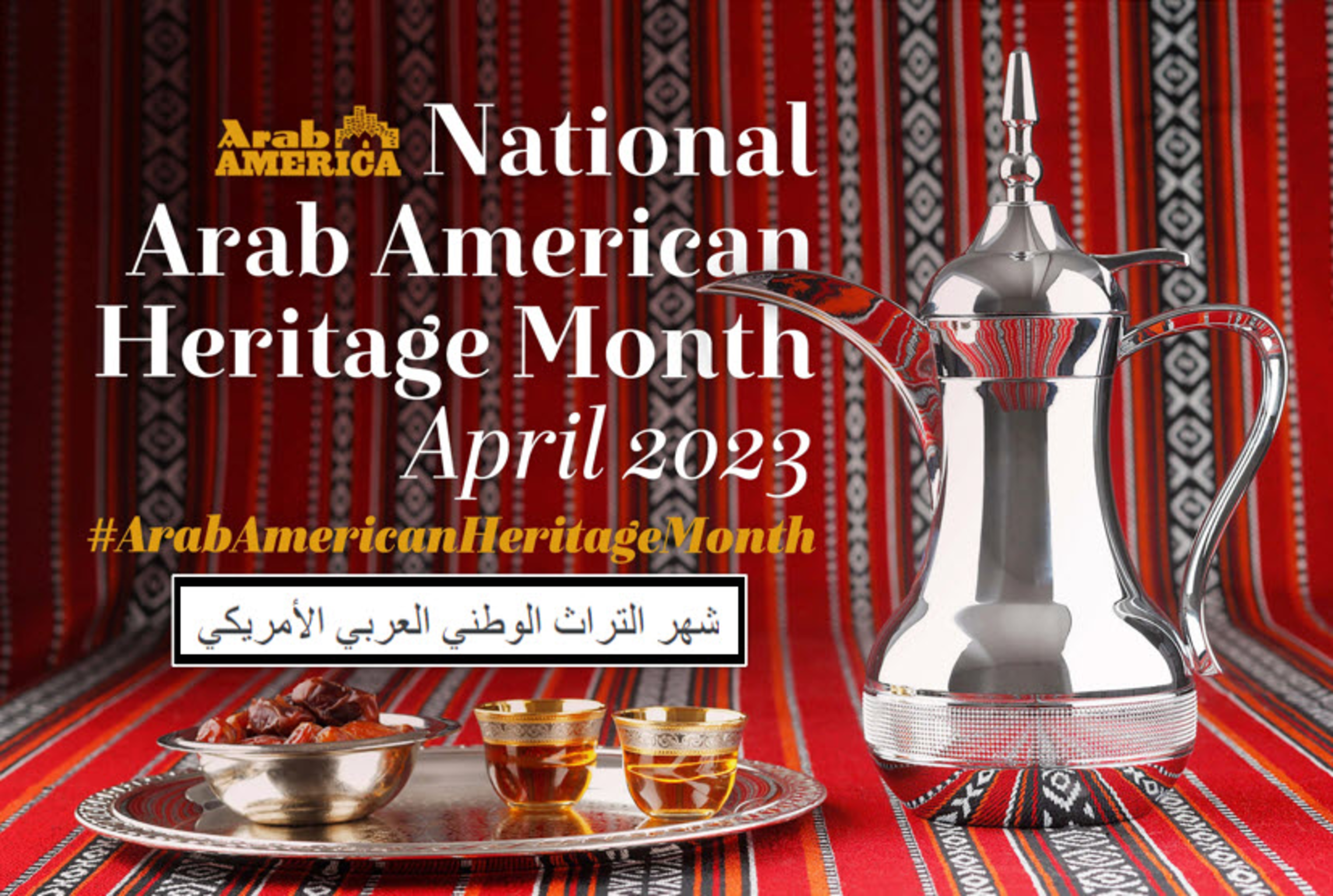
Celebrating National Arab American Heritage Month (NAAHM)
Written by: Najwa Dahdah
As an Arab American early childhood expert, I take pride in celebrating National Arab American Heritage Month (NAAHM) with my CDA® and early childhood community. I immigrated to the United States at age 11 and experienced what immigrants often face as they assimilate into a new country.
With over 23 years in the early childhood profession, I have been fortunate to advance my education from the CDA to a master’s degree in ECE. Residing in Michigan, the second state with the most Arab Americans (Statista), I saw a need to recruit and train culturally and linguistically responsive CDA candidates to support our early childhood programs.
As an adjunct faculty member for Wayne County Community College District (WCCCD) and co-chair with my colleague Dr. Dib Saab of the Arabic Cultural Association, we thank Dr. Fidelis D’Cunha- District Provost, Diversity, Equity, and Inclusion for honoring and acknowledging the Arab American Heritage Month celebration (Ih-Tifal) on April 29, 2023. (wcccd.edu)
The National Arab American Heritage Month (NAAHM) initiative was founded to partner with national cultural institutions, school districts, municipalities, state legislatures, public figures, and non-profit organizations to issue proclamations and engage in special events that celebrate our community’s rich heritage and contributions to America. In 2022, NAAHM transformed from a celebration to a movement.
Arab World Data
The Arab world is comprised of 22 countries, represented by the League of Arab States. The Arab world can be divided into three major geographical regions:
- The Maghreb (North Africa)
- The Gulf Region
- The Levant
These regions are extremely diverse in terms of their people, history, dialects, and local customs. While united by a common language and values, these commonalities can obscure the cultural diversity that exists.
Religions
Arabs are people who can encompass all religious faiths. The three Abrahamic traditions (Islam, Christianity, Judaism) are the faiths primarily represented. All three share a lineage of certain prophets and as such bear some commonalities in traditions and faith elements as well as some differences.
Where do Arab Americans Live?
According to the Arab American Institute (AAI), Arab immigrants began coming to the U.S. in sizable numbers during the 1880s. Today, it is estimated that nearly 3.7 million Americans trace their roots to an Arab country. Arab Americans are found in every state, but more than two-thirds live in just 12 states: California, Michigan, New York, Florida, Texas, New Jersey, Illinois, Ohio, Pennsylvania, Virginia, and Massachusetts. Metropolitan Los Angeles, Detroit, and New York are home to one-third of the population. The majority of Arab Americans are native-born, and nearly 82% of Arabs in the U.S. are citizens. Arab American Institute (aaiusa.org).
Professions, Education, and Achievements
Immigrant parents wanted a better and easier life for their children. They looked for their children to become doctors, lawyers, or engineers - jobs that were seen to provide a healthy income, stability, and social status that are part of their American dream. These jobs became the calling for much Arab American youth, helping to fulfill the hopes of their parents, and integrating them into an American economically stable life.
Arab Americans have historically placed a high value on education. This resulted in Arab Americans having education rates that exceed the general U.S. population. Census reports indicate that over 40% of Arab Americans have at least a bachelor’s degree, compared to 24% of the general U.S. population.
The Arabic Language
- Modern Standard Arabic: One written language, used in public speeches, religious sermons, media, and publications.
- Quranic Arabic: Since 622 A.D., the primary language for prayer for Muslims around the world.
- National and regional dialects: (30) Used in everyday life.
- (Mohammed Hirchi Associate Professor of Arabic, Colorado State University) Diversity-in-the-Arab-World_Hirchi-2018.pdf
Hospitality, Food & Friendship
Hospitality is very important in Arab culture. Providing food and drink is typical when visiting a home, or even a business. It’s important that this hospitality is accepted and appreciated. Treating guests well is a way of gaining honor. Each country has its famous dishes. People from various countries will proudly prepare these dishes for their guests.
Music
The National Arab Orchestra (NAO) is dedicated to preserving and performing the classical and contemporary traditions of Arab music and provides educational opportunities to students bridging social and cultural barriers through music.
The Arab American National Museum
The Arab American National Museum (AANM) is located in Dearborn. MI is devoted to recording the Arab American experience. It connects communities to Arab American culture and experiences. AANM’s goal is to document, preserve and present the history, culture, and contributions of Arab Americans. The exhibitions cover the Arab world and history from the first immigrants who arrived in the U.S. during the late 19th century to today.
Census Data
National Network for Arab American Communities (NNAAC) and allies have been advocating for the Office of Management and Budget (OMB) to include a Middle Eastern and North African category (MENA) as a racial and ethnic category in its data collection standards for equity and inclusion. Count MENA IN for Inclusion & Equity
I hope you’ve enjoyed the history and contributions of Arab Americans to the United States. As early childhood educators, we serve diverse families in our communities. Let’s celebrate and acknowledge the heritage of the children and families we serve. I encourage you to invite the families to celebrate the Week of the Young Child while incorporating the celebration of NAAHM. Click on the themes suggested by the National Association for the Education of Young Children (NAEYC) WOYC Overview| NAEYC.
Below are more details on Arab American heritage and an educators kit provided by Arab America Foundation.